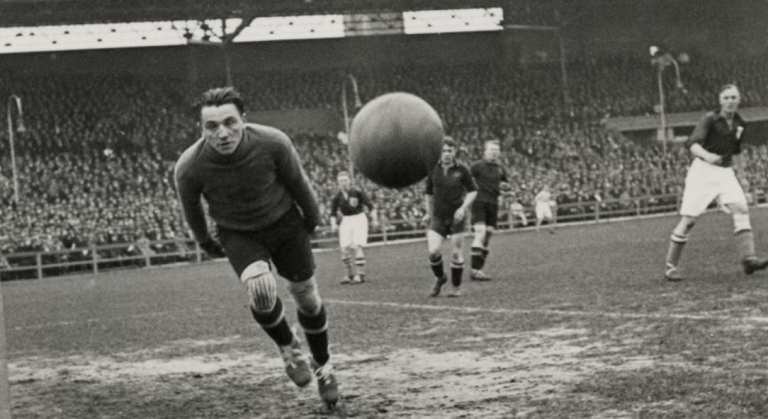
Few questions in sport generate more genuine historical debate than the origins of football. Every culture with a ball and open ground seems to have invented some version of the game independently — making the question of who invented soccer less a matter of single discovery and more a story of parallel human instinct toward kicking things competitively. What we can trace with reasonable historical confidence is how the modern game emerged, codified, and conquered the world’s sporting imagination more completely than any other athletic discipline.
db bet follows soccer’s global narrative with genuine analytical depth — recognizing that understanding when was soccer invented, how long is a soccer game, and the rules governing modern play provides the foundation for appreciating why this sport generates more sustained human passion than any other competitive discipline on earth.
Ancient Origins: Before Modern Soccer
Soccer’s roots extend far deeper than Victorian England’s football associations. Chinese records from the Han Dynasty — approximately 200 BCE — document cuju, a competitive kicking game whose structural similarities to modern football are unmistakable. Players kicked a leather ball through a small opening into a net, developing foot skill and competitive intensity that modern players would immediately recognize.
Ancient Greece had episkyros. Rome had harpastum. Mesoamerican cultures developed rubber ball games with competitive kicking elements predating European contact entirely. Japan’s kemari — still practiced ceremonially today — maintained elegant ball-keeping traditions through courtly culture across centuries of continuous practice.
These parallel developments across disconnected civilizations reflect something fundamental about human competitive instinct — kicking a ball toward a target satisfies something so basic that cultures independently discover and develop it without requiring external transmission.
When Was Soccer Invented: The Modern Answer 🏟️
The honest answer to when was soccer invented depends entirely on what “soccer” means in the question. Kicking games existed for millennia. But modern association football — the globally standardized game played today — has a specific founding moment with genuine documentary evidence.
October 26, 1863. The Football Association formed in London’s Freemasons’ Tavern, establishing the first standardized rules that separated association football from rugby football through the critical decision to prohibit handling the ball. This codification moment created the institutional foundation upon which global football development subsequently built everything else.
The word “soccer” itself derives from “association” — specifically from the Oxford University slang practice of abbreviating words and adding “-er.” “Assoc” became “soccer” through exactly this linguistic playfulness, creating the term that British users eventually exported to North America where it distinguished association football from American football in contexts where both existed simultaneously.
Who Invented Soccer: The Real Story
The question of who invented soccer resists simple individual attribution — and attempts to name a single inventor misunderstand how sports develop through collective institutional processes rather than individual creative acts. Ebenezer Cobb Morley is frequently credited as the primary architect of the 1863 Football Association rules — his drafting of the foundational laws providing the specific document that codified modern football’s defining characteristics.
But Morley worked within a collaborative process involving multiple clubs whose representatives negotiated competing traditions into consensus rules. Cambridge University’s earlier rule attempts, Sheffield Football Club’s independent codification, and various public school traditions all contributed elements that the 1863 process synthesized rather than invented from scratch.
Football’s invention was ultimately democratic — emerging from collective negotiation between communities that had been playing incompatible versions of the same basic game and recognized that standardization served everyone’s competitive interests better than continued fragmentation.
The Laws of the Game: Foundational Rules
Modern soccer’s rules — maintained by the International Football Association Board since 1886 — reflect both the 1863 foundational decisions and subsequent refinements that competitive experience revealed as necessary improvements to the original framework.
Eleven players per side on a rectangular pitch. A goalkeeper who may handle the ball within their penalty area. Goals scored by getting the ball across the opponent’s goal line between the posts and under the crossbar. Offside rules preventing attackers from gaining unfair positional advantages. These foundational elements have remained remarkably stable across 160 years of competitive football development — a testament to how well the original framework captured something genuinely right about how the game should function.
The offside rule deserves specific attention as the rule generating most tactical evolution across football’s competitive history. Its specific implementation has changed several times — most recently through video assistant referee technology that applies the law with millimeter precision that human officials never achieved. These technological implementations have generated significant debate about whether the rule’s spirit has been served or undermined by its literal application.
How Long Is a Soccer Game ⏱️
The answer to how long is a soccer game has a simple official answer and a more complex practical reality. Regulation play consists of two 45-minute halves separated by a maximum 15-minute halftime interval — 90 minutes of official playing time that every professional competition worldwide uses as its standard framework.
The practical reality extends beyond 90 minutes through added time — stoppage time added at each half’s conclusion to compensate for time lost during injuries, substitutions, goal celebrations, and other stoppages that interrupt playing continuity. Modern added time has increased substantially as governing bodies push referees to accurately reflect actual stoppages rather than applying the traditional token two or three minutes regardless of actual time lost.
Extended matches requiring decisive outcomes beyond 90 minutes add two 15-minute extra time periods — bringing potential game duration to 120 minutes before penalty shootouts determine winners if scores remain tied. This complete timeline means major knockout competition matches can extend to two hours of playing time plus additional time for substitution decisions and shootout procedures.
Offsides, Fouls, and Cards: The Disciplinary Framework
Soccer’s disciplinary system — yellow cards for cautionable offenses, red cards for serious misconduct or second yellow cards, and the resulting numerical disadvantages — creates competitive consequences that shape tactical decision-making throughout matches rather than merely punishing individual poor behavior.
The yellow card system’s accumulation across competitions — multiple yellows leading to automatic suspensions — creates strategic dimensions that extend beyond individual matches into competition management. Coaches and players monitor yellow card accumulations carefully, particularly in tournament knockout phases where suspension timing can determine whether key players are available for decisive matches.
Foul recognition has evolved significantly through video technology — VAR review catching incidents that match officials missed in real time, expanding the effective scope of disciplinary frameworks beyond what human observation alone could monitor. This technological expansion has generated significant debate about game flow interruption versus accuracy improvement that football’s governing bodies continue navigating.
Soccer’s Global Spread 🌍
Understanding soccer’s contemporary dominance requires appreciating how completely British imperial and commercial networks distributed the game across every continent between 1863 and 1914 — a fifty-year period during which association football embedded itself so deeply into diverse cultures that it became genuinely their own rather than remaining a foreign import.
Sailors, merchants, teachers, and diplomats carried football into South America, Africa, and Asia — local populations adopting and adapting the game with such enthusiasm that within generations they were competing with and eventually surpassing the British originators. Brazil’s football culture, Argentina’s tactical sophistication, and Africa’s increasingly powerful competitive programs all reflect this pattern of adoption transforming into genuine ownership and innovation.
The FIFA World Cup’s establishment in 1930 provided the institutional framework that crystallized football’s global competitive hierarchy — creating the quadrennial competition whose status as humanity’s most watched sporting event reflects genuine global emotional investment rather than commercial manufacturing of artificial significance.
The Modern Game’s Evolution
Contemporary soccer has evolved tactically, physically, and technologically in ways that would make the 1863 founders genuinely unrecognizable to the game they codified. Playing speeds have increased dramatically. Tactical sophistication — pressing systems, positional play, high defensive lines — has reached analytical complexity that requires specialized coaching knowledge to implement effectively. Athletic demands have expanded to require combination of aerobic capacity, explosive power, and technical skill that previous eras’ players couldn’t have anticipated as simultaneously necessary.
Data analytics has transformed how clubs identify talent, prepare for opponents, and evaluate performance — creating competitive advantages through information processing that the sport’s physical and technical training traditions don’t alone provide. Expected goals metrics, pressing intensity measurements, and spatial analysis tools are now standard preparation resources at professional levels where marginal competitive advantages justify substantial analytical investment.
What hasn’t changed is the fundamental emotional proposition that made the game worth playing in 1863 and worth watching today — eleven people collectively pursuing a simple objective against eleven people collectively preventing them, within a framework elegant enough that the entire world immediately understood and loved it.