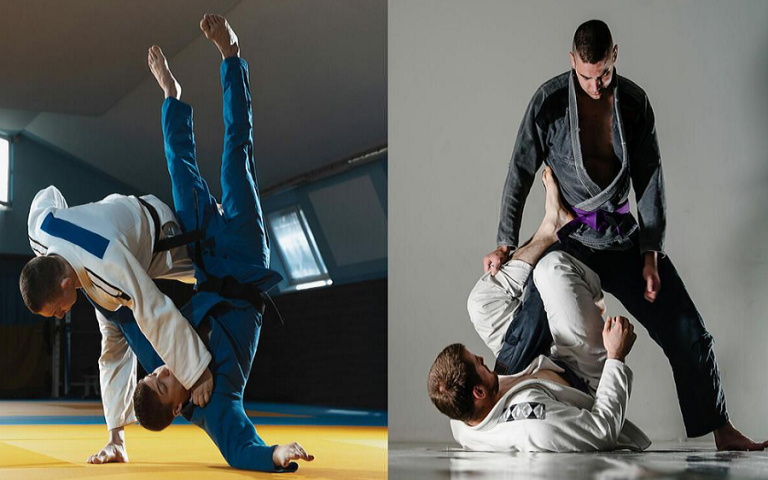
Combat sports carry a particular fascination. Unlike team games where individual brilliance gets absorbed into collective performance, martial arts strip competition down to its most elemental form — two people, equivalent rules, and nothing between them except technique, timing, and mental fortitude. Few comparisons in combat sport generate more genuine interest than the relationship between judo and jiu jitsu.
Dbbet recognizes that martial arts represent a growing dimension of global sports engagement — attracting passionate communities of practitioners, dedicated competitive followers, and increasing mainstream sporting attention. Understanding what is judo, how it relates to jiu jitsu, and where competitions like the presidents cup fit into the broader martial arts landscape provides essential context for anyone engaging seriously with combat sports culture today.
What Is Judo? The Foundation
Judo was created by Jigoro Kano in Japan in 1882 — a martial art built around the principle of maximum efficiency with minimum effort. Kano developed judo from traditional jujutsu techniques, refining and systematizing them into a coherent discipline emphasizing throws, takedowns, and ground control over striking.
The name translates directly as “gentle way” — a philosophical statement about using an opponent’s energy and momentum against them rather than relying purely on superior physical force. This principle makes judo genuinely accessible across body types and ages, while simultaneously creating extraordinary depth for serious competitive practitioners who spend careers refining its technical demands.
Olympic inclusion since 1964 has given judo the global competitive infrastructure that most martial arts never achieve — standardized rules, international federation governance, and the quadrennial spotlight that transforms sports into genuine cultural phenomena across participating nations.
The Technical Heart of Judo 🥋
Judo competition centers on achieving ippon — the decisive score awarded for executing a major throw that lands the opponent on their back with force and control, or for achieving a submission or pin that demonstrates complete dominance. This scoring philosophy shapes everything about how judo is practiced and competed.
The throwing techniques represent judo’s most spectacular dimension. Hip throws, shoulder throws, leg sweeps, and sacrifice techniques — each requiring precise timing, balance disruption, and explosive execution that takes years of dedicated practice to perform reliably against resisting opponents at competitive level.
Ground work completes judo’s technical picture. Pins, chokes, and joint locks applied after takedowns or in transitions provide the grappling dimension that determines outcomes when throwing exchanges produce no decisive result. Competitive judo’s time limits on ground work create a dynamic that rewards continuous action over patient positional grinding.
Jiu Jitsu: Philosophy and Development
Jiu jitsu shares deep historical roots with judo — both descending from traditional Japanese jujutsu and carrying that heritage into radically different competitive expressions. The most globally prominent contemporary form, Brazilian jiu jitsu, developed when Mitsuyo Maeda — a judoka — brought Japanese grappling techniques to Brazil in the early twentieth century.
The Gracie family’s refinement of these techniques — emphasizing ground fighting, positional control, and submission seeking over throwing — created something distinctively different from its Japanese origins. Brazilian jiu jitsu developed the theoretical framework that a smaller, technically superior grappler could defeat a larger, stronger opponent through leverage, positioning, and submission technique rather than physical dominance.
This democratizing philosophy — technique defeating athleticism — gave jiu jitsu enormous appeal across demographics that pure strength-based combat sports couldn’t attract equivalently. The message that intelligent grappling overcomes physical advantage resonated with millions of practitioners worldwide.
Judo vs Jiu Jitsu: The Core Differences
Comparing judo vs jiu jitsu reveals disciplines that share ancestry while diverging dramatically in competitive emphasis, rule structures, and practical applications.
Judo prioritizes the standing phase — throws and takedowns represent the primary path to victory, with ground work permitted but time-limited in competitive contexts. Jiu jitsu inverts this emphasis almost completely — practitioners frequently choose to enter ground positions immediately, treating the standing phase as a necessary transition rather than the primary competitive arena.
Scoring philosophies differ fundamentally. Judo’s ippon system rewards decisive, explosive action — a single perfect throw can end a contest instantly regardless of what preceded it. Jiu jitsu’s point and submission system rewards positional accumulation and sustained pressure — building advantages through sequential improvements in position that reflect strategic patience rather than explosive decisiveness.
Clothing matters differently too. Judo competition exclusively uses the gi — the traditional jacket that provides gripping surfaces essential to judo’s throwing mechanics. Jiu jitsu has developed both gi and no-gi competition streams, with no-gi grappling removing clothing grips entirely and creating a faster, more physically demanding competitive environment that has connected jiu jitsu to MMA preparation cultures globally.
The Presidents Cup: Elite Judo Competition 🏆
The Presidents Cup represents one of judo’s prestigious international tournament fixtures — bringing together elite competitors from across the global judo community in competition that carries significant ranking points and serves as important Olympic cycle preparation for national programs targeting podium performances.
Tournament formats at this level expose competitors to the full breadth of international judo styles — the explosive Eastern European throwing traditions, the technical precision of Japanese competitors, the physical intensity of Central Asian programs, and the increasingly sophisticated approaches being developed across emerging judo nations building competitive programs with serious continental ambitions.
For national judo federations, the presidents cup and equivalent international fixtures provide essential competitive calibration — revealing honestly where national programs stand within global competitive hierarchies and identifying technical areas requiring development investment before major championship cycles arrive.
Crossover and Mutual Influence
The judo vs jiu jitsu conversation becomes more interesting when examining how the disciplines have influenced each other across their parallel development histories. Elite judo practitioners frequently incorporate jiu jitsu ground work concepts into their competitive preparation — recognizing that sophisticated submission awareness improves decision-making in judo’s ground work phases.
Jiu jitsu competitors at the highest levels increasingly study judo throwing mechanics — understanding that entering ground positions from standing exchanges is significantly easier when takedown capability makes opponents cautious about maintaining upright postures. Mixed martial arts has accelerated this cross-pollination dramatically, creating competitive environments where practitioners need genuine competence in both throwing and ground grappling to compete effectively.
This mutual influence has enriched both disciplines — creating more complete practitioners across the grappling martial arts community than the separated development of each tradition would have produced independently.
Physical and Mental Demands 💪
Both disciplines develop extraordinary physical and mental qualities — but their training emphases produce somewhat different athletic profiles that reflect each art’s competitive priorities.
Judo training builds explosive power, balance, and the specific coordination required for throwing technique execution against resisting partners. The physical demands are intense — drilling throws thousands of times, engaging in randori sparring sessions that develop timing and technical application under genuine competitive pressure.
Jiu jitsu training develops positional awareness, flexibility, and the specific endurance required for extended ground exchanges where static positions require sustained muscular effort. Mental demands center on strategic thinking — reading positional situations, anticipating opponent responses, and identifying submission opportunities within complex entangled positions that require genuine spatial intelligence to navigate effectively.
Both disciplines reward consistent long-term practice more than natural athleticism — making them particularly valuable developmental tools for young athletes whose physical gifts might not match those of peers in more athleticism-dependent sports.
Global Growth and Sporting Culture 🌍
Judo’s Olympic status gives it institutional global reach that jiu jitsu is only beginning to approach through its own international federation development and growing continental championship structures. Nations across Asia, Europe, and increasingly Africa and South America have developed serious national judo programs supported by government sports funding and Olympic medal aspirations.
Jiu jitsu’s growth trajectory is arguably more culturally dynamic — driven by grassroots practitioner communities, MMA’s mainstream explosion, and social media’s ability to distribute technical content globally without requiring institutional infrastructure. Academies have proliferated across every continent, creating practitioner communities in countries where traditional martial arts institutional development would have taken decades to establish equivalent reach.
Both disciplines are finding significant new audiences across South Asia and particularly Bangladesh — where combat sports culture is developing rapidly alongside broader sports development investment and growing international sporting ambitions.
Choosing Between Disciplines
For practitioners considering which discipline to pursue, the judo vs jiu jitsu question ultimately resolves around personal competitive goals and learning preferences rather than any objective quality hierarchy between the arts.
Judo offers Olympic competitive pathways, structured belt progression with clear technical benchmarks, and throwing skills with genuine self-defense applicability that standing grappling provides. Jiu jitsu offers extraordinary ground fighting depth, flexible gi and no-gi competitive options, and a global academy network making quality instruction accessible across more geographic locations than judo’s more institutionally concentrated infrastructure currently reaches.
Many serious practitioners eventually explore both — finding that each discipline illuminates the other in ways that make the combined practitioner more complete than specialization in either art alone produces. That completeness, increasingly, is what serious grappling competition at every level ultimately demands.