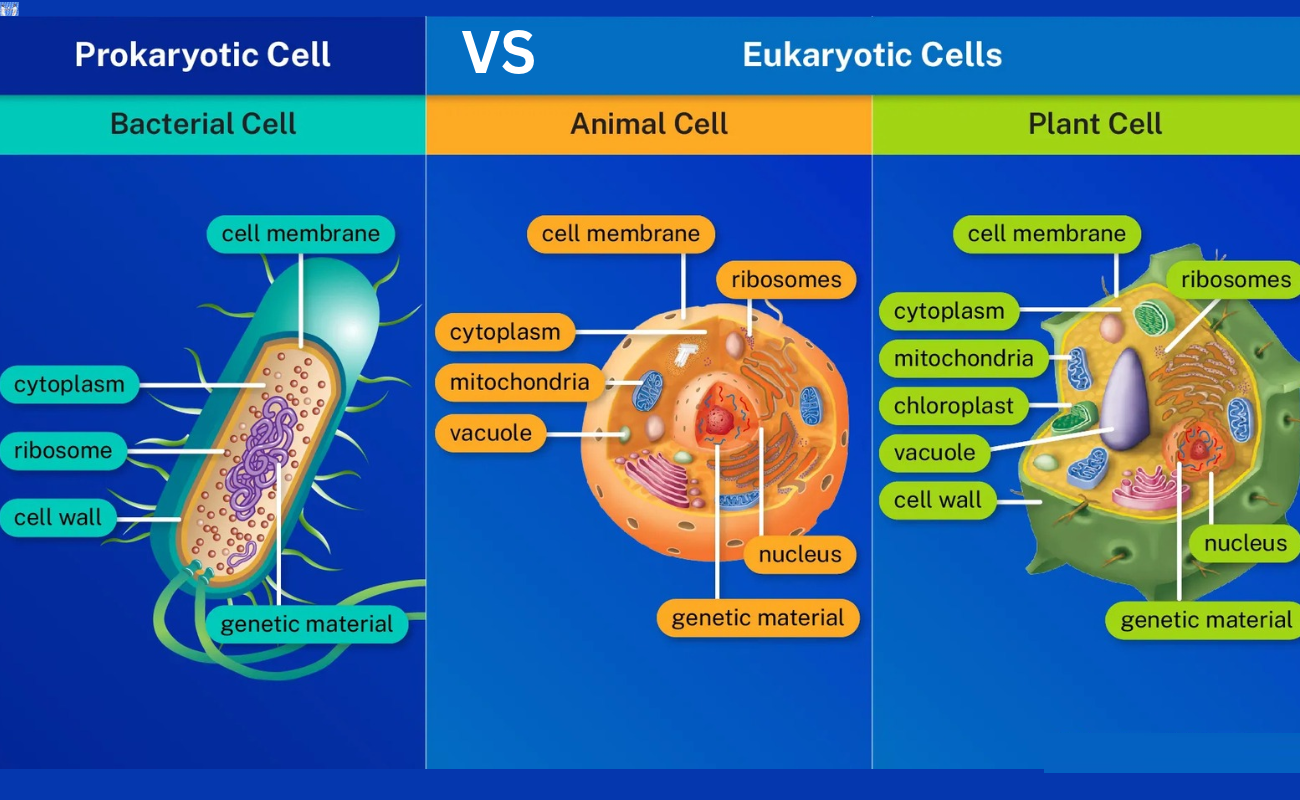
Every living thing is made of cells, but not all cells are the same. They have been classified into two categories, Prokaryotic and Eukaryotic. Understanding the difference between prokaryotic and eukaryotic cell type is an important concept in biology and frequently included in biology tests such as NEET.
In this article you will learn what each cell is, the differences between them and some simple examples. This guide is written in straightforward language, so you’ll be able to easily follow each point. At the end we also answer some common questions.
What is Prokaryotic Cell?
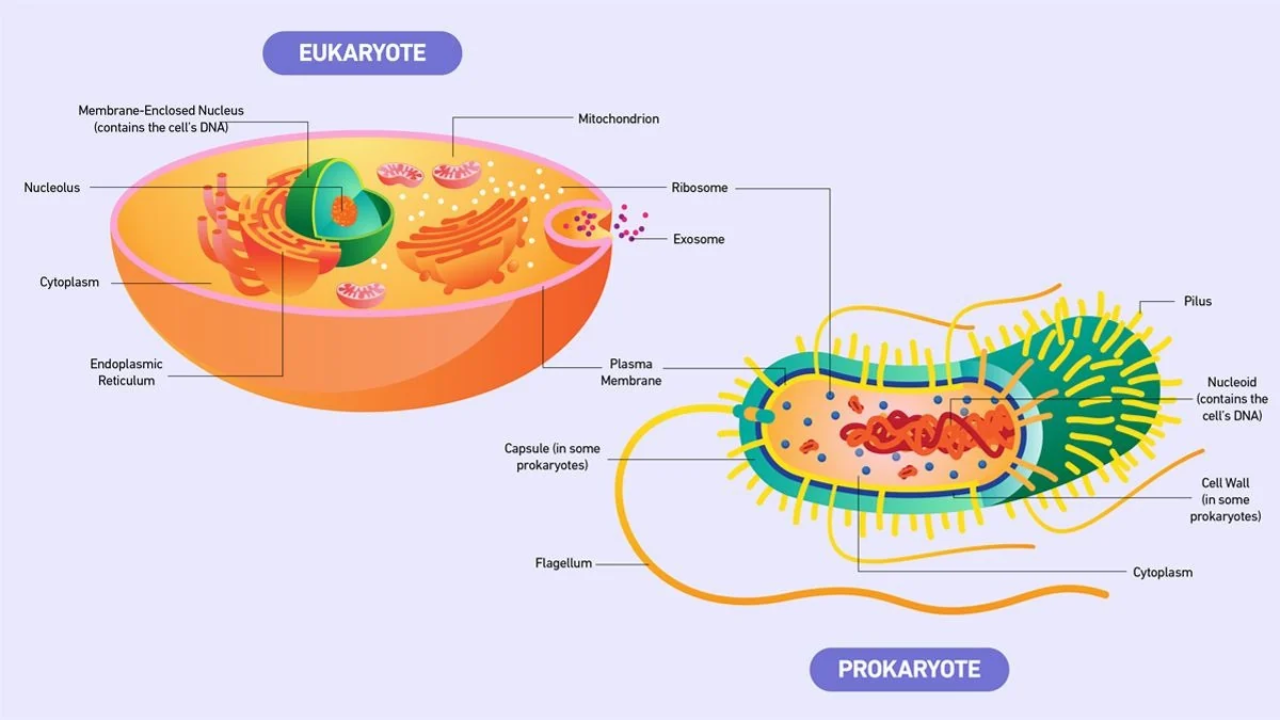
The prokaryotic cell is a very basic type of cell. Does not possess a true nucleus. It also does not have organelles that are wrapped in a membrane. Rather, its DNA is free in the cytoplasm, known as the nucleoid.
Bacteria and archaea have prokaryotic cells. They are very small, typically 1-5 micrometres in size. They reproduce themselves by a process called binary fission in which one cell divides into two identical cells. Although they are simple, they’re very tough cells. Others live in hot springs, salty lakes and other challenging environments where most life cannot thrive.
What is Eukaryotic Cell?
A eukaryotic cell is a complex type of cell. It has a definite nucleus with a membrane around the nucleus. The cell contains DNA in the chromosomes that are stored in the nucleus.
Many organelles with specific functions are also present in these cells. Mitochondria make energy. ER is involved in the production of protein and fats. The Golgi compound sorts and packs proteins.
So eukaryotic cells can perform multiple tasks at once due to these parts. They are present in animals, plants, fungi and protists. These tend to be bigger than prokaryotic cells, typically measuring 10–100 micrometres across.
Difference Between Prokaryotic and Eukaryotic Cell
These two cell types differ mainly in the following ways:
| Feature | Prokaryotic Cell | Eukaryotic Cell |
| Nucleus | No true nucleus; DNA is in the nucleoid | True nucleus with a membrane |
| Size | Small (1–5 µm) | Larger (10–100 µm) |
| DNA | Circular | Linear, with histone proteins |
| Organelles | No membrane-bound organelles | Many membrane-bound organelles |
| Mitochondria | Absent | Present |
| Cell division | Binary fission | Mitosis and meiosis |
| Ribosomes | 70S (smaller) | 80S (larger) |
| Cell wall | Usually present; has peptidoglycan in bacteria | Present in plants (cellulose) and fungi (chitin); absent in animals |
| Flagella | Simple, made of flagellin | Complex, made of microtubules |
| Reproduction | Asexual | Sexual and asexual |
| Metabolism | Simpler | More complex |
| Cytoskeleton | Simple | Complex |
To sum up, a prokaryotic cell is small and simple and a eukaryotic cell is large and complex. The primary rule to keep in mind when learning about the two types of cells.
Examples of Prokaryotic and Eukaryotic Cells
Here are some easy examples of each cell type that you may see in your books.
Prokaryotic Cells
The most common prokaryotic cell is the bacteria cell. E. coli is a bacteria that is found in the gut of humans and animals. S. aureus are bacteria that can infect a person’s skin. The second group is the Archaea. Methanogens are organisms that produce methane, found in swamps. Halophiles live in salt lakes and they grow on salt. Bacteria which are prokaryotes are also useful, such as making curd and cleaning up waste!
Eukaryotic Cells
Human muscle cells are an example of animal cells.Human muscle cells are an example of animal cells. Leaf cells make food (with chloroplasts) and root cells absorb water. Fungal cells are found in yeast, which is used in baking, and in moulds. Examples of protist cells are Amoeba (false foot) and Paramecium (fresh water).
FAQs
1.What are 5 differences between the prokaryotic and eukaryotic cells?
The first difference is that prokaryotic cells do not contain a true nucleus whereas eukaryotic cells do. Secondly, prokaryotes are smaller.
2.What are prokaryotes and eukaryotes in NEET?
Prokaryotes are single-celled organisms that lack a true nucleus and membrane-bound organelles (bacteria, archaea). In eukaryotes, the nucleus and organelles are present.
3.Do eukaryotes have a cell membrane?
Yes. All eukaryotic cells have this plasma membrane, also known as a cell membrane. Composed of phospholipids, double layers of fat with proteins in them.
4.Do prokaryotes have DNA?
Yes. Prokaryotes contain DNA, but not in a nucleus. Typically, it is one circular chromosome which resides in the nucleoid area of the cytoplasm.
5.Which cell is larger and why?
Eukaryotic cells are larger, typically 10 – 100 micrometres in diameter. They require more room to accommodate the nucleus and numerous cellular components.
Read More: The Quiet Way Your Weight Shapes What You Pay for Health Cover