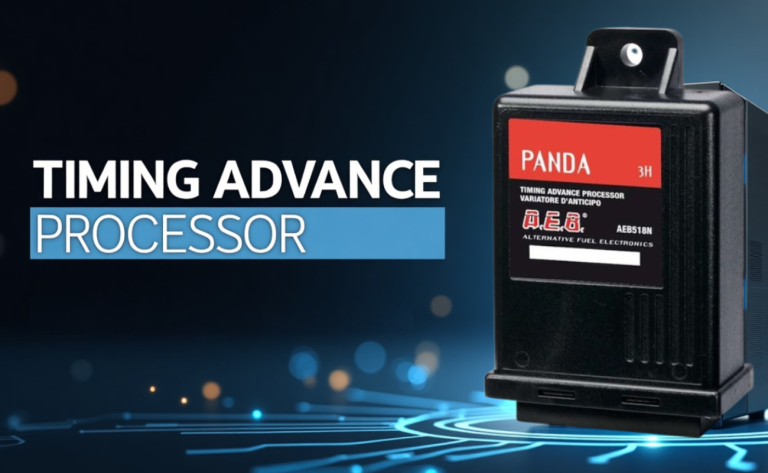
If you’re running your car on CNG or LPG, you’ve probably heard about timing advance processors. Maybe your mechanic mentioned one, or you saw it in a conversion kit. Either way, it’s a small box that makes a big difference.
Petrol burns fast. CNG and LPG? Not so much. So when you switch fuels, the spark needs to fire earlier in the cycle. That’s what a timing advance processor does — it shifts the timing forward so the fuel actually burns when it’s supposed to. No knocking, no power loss, no crappy mileage.
This guide covers what these things are, which type fits your car, and how to pick the right one without overthinking it.
Quick Takeaways
A timing advance processor pushes spark timing forward for CNG/LPG because those fuels burn more slowly than petrol.
Different ignition systems need different TAP models — you can’t just buy any random one.
Most have an emergency bypass, so your car won’t die if the unit fails.
Getting the right model and setting it up properly matters more than buying the most expensive one.
What a Timing Advance Processor Actually Does
When your engine runs on petrol, the spark plug fires at a specific moment. The fuel ignites, expands, and pushes the piston down. Simple.
Switch to CNG or LPG and that same timing doesn’t work anymore. These fuels take longer to burn completely. If the spark fires at the petrol timing, the fuel is still burning when the piston is already moving down — wasted energy, rough running, and that annoying knocking sound.
The TAP intercepts the ignition signal, adds some advance, and sends it on its way. Now the spark fires earlier, the fuel has time to burn properly, and your engine runs like it should again.
Most units also have a bypass connector. If something goes wrong, you plug it in and the car reverts to factory timing. You can still drive while you figure out the problem.
Ignition System Types and Which TAP Fits
Old Mechanical Points Systems
Found in older cars. Physical metal contacts open and close inside the distributor to trigger the spark. Low-tech but reliable.
The AEB531 handles these. You wire it between the distributor and the coil, and it catches the signal from the points.
Electronic Ignition with Distributor
Same distributor setup, but no physical points. An electronic module does the switching instead.
Faster and more precise.
The AEB526N and AEB549N work here. They tap into the ignition module’s output signal.
Electronic Ignition with Module
Some systems have a dedicated ignition module that already adjusts timing based on engine load and speed. These need a more flexible TAP.
The AEB515N is programmable, so you can set custom timing curves for your specific engine and fuel setup
Crankshaft Position Sensor Systems
Modern engines ditched the distributor entirely. A sensor on the crankshaft tells the ECU exactly where everything is, and the ECU handles spark timing.
Two sensor types exist:
- Inductive: generates an analog voltage signal as crankshaft teeth pass by
- Hall effect: outputs a clean digital square wave when the magnetic field changes
Each needs its own TAP model.
How to Pick the Right One
What to Check Before Buying
- Your ignition system type — this is the dealbreaker. The wrong model won’t work.
- Fuel type — CNG, LPG, or switching between both? Some TAPs handle both, some don’t.
- Timing range needed — check what’s typical for your engine.
- Bypass feature — make sure it has one. You’ll thank yourself later.
AEB Models Breakdown
| Model | Ignition System | CKP Sensor | Fuel | Timing Range | Bypass |
| AEB531 | Mechanical points | — | CNG, LPG | 0–25° | Yes |
| AEB526N | Electronic distributor | — | CNG, LPG | 0–20° | Yes |
| AEB549N | Electronic distributor | — | CNG, LPG | 0–20° | Yes |
| AEB515N | Electronic module | — | CNG, LPG | Programmable | Yes |
| AEB510N | CKP sensor | Inductive | CNG, LPG | 0–30° | Yes |
| AEB516N | CKP sensor | Inductive | CNG, LPG | 0–30° | Yes |
| AEB511N | CKP sensor | Hall effect | CNG, LPG | 0–30° | Yes |
| AEB518N | CKP sensor | Hall effect | CNG, LPG | 0–30° | Yes |
Compatibility Table
| Ignition System | TAP Models | Notes |
| Mechanical points | AEB531 | Wire between distributor and coil |
| Electronic distributor | AEB526N, AEB549N | Connect to module output |
| Electronic module | AEB515N | Wire between distributor and coil |
| CKP inductive | AEB510N, AEB516N | Watch signal integrity |
| CKP Hall effect | AEB511N, AEB518N | Verify 5V reference |
Installing and Setting It Up
The Basics
Every install follows the same rough steps:
- Disconnect the battery
- Find where to connect based on your ignition type
- Wire in the TAP per the diagram
- Set the timing advance
- Test and verify
Mechanical Systems (AEB531)
Read Also: Iosmirror.cc App For Simply Screen Sharing Between iOS & Android
Install:
- The wire between the distributor negative and the coil negative
- Solid ground connection
- Mount away from heat and moisture
Set:
- Use the potentiometer to dial in advance
- Start around 10–15 degrees
- Adjust from there based on how it runs
Check:
- Timing light to confirm actual advance
- Test the bypass connector works
Electronic Distributor Systems (AEB526N, AEB549N)
Install:
- Find the ignition module output wire
- Wire TAP inline with that signal
- Check power and ground
Set:
- Adjust with DIP switches or a potentiometer
- Watch performance while tuning
- Check at idle and higher RPMs
CKP Sensor Systems (AEB510N, AEB516N, AEB511N, AEB518N)
Install:
- Locate the CKP sensor connector
- Wire TAP inline with the signal wire
- Keep polarity and shielding correct
Set:
- Oscilloscope to verify a clean signal
- Adjust based on sensor type and engine needs
- Test across the full RPM range
Common Issues and How to Fix Them
| Problem | Probably Why | What to Do |
| Knocking on CNG/LPG | Advance too low | Increase it |
| Weak acceleration | Advance too high | Decrease it |
| Won’t start | Wiring wrong | Recheck connections |
| Rough idle | Idle bypass off | Adjust idle setting |
| TAP dead | No power | Check 12V and ground |
Emergency Bypass Connector
All AEB TAPs come with one. It’s a simple plug that:
- Connects the original ignition parts directly
- Skips the TAP completely
- Restores factory timing instantly
- Let’s you keep driving if the unit fails
Use it when:
- The TAP seems broken
- Performance drops after install
- You’re troubleshooting and need factory timing back
- Anything happens where you need the car running normally
- Tuning for CNG vs LPG
CNG:
- Higher octane, so you can run more advanced
- Slower burn needs earlier spark
- Cleaner combustion, less knock risk
LPG:
- Octane similar to premium petrol
- Different vaporization, so timing needs tweaking
- Watch the system pressure
Final Words
Picking a timing advance processor isn’t complicated, but you need to match it to your car. Figure out your ignition system first. Everything else follows from there.
AEB has been doing this for ages, so their stuff is solid and well-supported. A good TAP pays for itself through smoother running, better mileage, and fewer headaches.
Not sure which one fits? Ask your installer or a specialist before you buy. Better to spend five minutes checking than hours fixing a wrong install.
FAQ
1. What does a timing advance processor do?
Answer: Shifts spark timing forward so CNG and LPG burn properly, preventing knock and power loss.
2. How do I pick the right one?
Answer: Check your ignition system type, fuel type, and timing range. Ask a pro if you’re unsure.
3. Do I need to recalibrate it?
Answer: Most hold settings fine, but check now and then — especially if the engine feels off.
4. Will it improve fuel economy?
Answer: Yes. Proper timing means the fuel burns efficiently instead of wasting energy.
5. Does any TAP work in any car?
Answer: No. Match it to your ignition system or it won’t work right.
Read more: Technorozen: The Future of Tech, Without the Hype
[…] Read More: Timing Advance Processor: A Straightforward Guide […]
[…] Read More: Timing Advance Processor: A Straightforward Guide […]