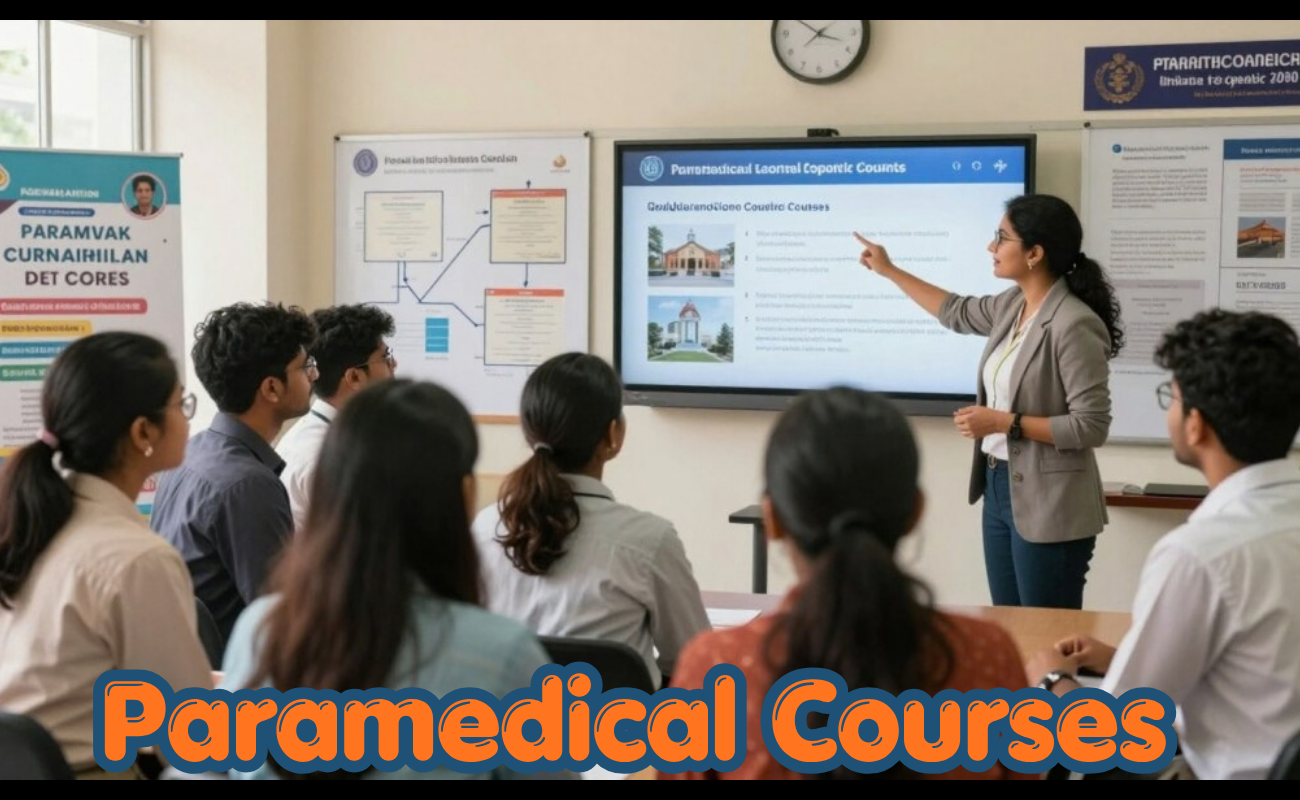
Think about the last time you visited a hospital. The doctor probably saw you for ten minutes. But who took your blood sample? Who ran the X-ray machine? Who prepared the operation theatre for surgery? Behind every smooth hospital visit, there’s an army of trained professionals working quietly. They’re called paramedics, and the courses that train them are called paramedical courses.
If you want a healthcare career without the long and expensive MBBS route, this guide is for you. We’ll cover the complete list of paramedical courses, their fees, eligibility, admission process, and the career scope waiting at the end. Simple words, real numbers, honest advice. Let’s begin.
What Are Paramedical Courses?
Paramedical courses are training programs that teach you how to support doctors in diagnosing and treating patients. You don’t become a doctor. You become the person doctors rely on every single day.
These courses are practical, affordable, and much shorter than MBBS. And here’s why that matters right now. India’s healthcare sector is expanding faster than ever, and the country needs lakhs of skilled paramedical professionals to fill the gap. That demand is your opportunity.
Types of Paramedical Courses
Paramedical education comes in three levels, and each level suits a different kind of student.

| Course Level | Duration | Who It’s For |
| Certificate Courses | 6 months to 1 year | Students who want the fastest entry into healthcare |
| Diploma Courses | 1 to 2 years | Students wanting solid training in a short time |
| Degree Courses | 3 to 4.5 years | Students aiming for higher positions and better pay |
Paramedical Courses List After 12th: Fees & Salary
Here are the most popular paramedical courses in India, along with what they cost and what they pay.
Diploma Courses
| Course Name | Duration | Approximate Fees | Starting Salary |
| DMLT (Medical Lab Technology) | 2 years | ₹50,000 to ₹1 lakh | ₹15,000 to ₹25,000 per month |
| GNM (General Nursing and Midwifery) | 3.5 years | ₹50,000 to ₹2 lakh | ₹15,000 to ₹25,000 per month |
| OT Technician | 2 years | ₹50,000 to ₹1 lakh | ₹12,000 to ₹20,000 per month |
| Dialysis Technician | 2 years | ₹50,000 to ₹1 lakh | ₹15,000 to ₹25,000 per month |
Degree Courses
| Course Name | Duration | Approximate Fees | Starting Salary |
| BSc in Radiology and Imaging Technology | 3 years + internship | ₹1.5 lakh to ₹5 lakh | ₹25,000 to ₹40,000 per month |
| BPT (Physiotherapy) | 4.5 years | ₹1.5 lakh to ₹5 lakh | ₹20,000 to ₹35,000 per month |
| BSc Optometry | 4 years | ₹1.5 lakh to ₹4 lakh | ₹20,000 to ₹35,000 per month |
| BSc Medical Lab Technology | 3 years + internship | ₹1 lakh to ₹4 lakh | ₹18,000 to ₹30,000 per month |
| BSc Cardiac Care Technology | 3 years + internship | ₹1.5 lakh to ₹4 lakh | ₹25,000 to ₹40,000 per month |
| BSc Anesthesia and OT Technology | 3 years + internship | ₹1.5 lakh to ₹4 lakh | ₹20,000 to ₹35,000 per month |
Government institutes like AIIMS charge only a few thousand rupees a year, while private colleges charge significantly more. Same degree, same recognition, very different cost. So if you can grab a government seat, take it.
Read Also: RTO Ahmedabad: Office Details, Services, Registration Process & Fees
Eligibility for Paramedical Courses
For the majority of students, the entry requirements are friendly.
12th class is required for diploma courses. The science stream with Physics, Chemistry and Biology is preferred with a 40-50 per cent marks in some colleges.
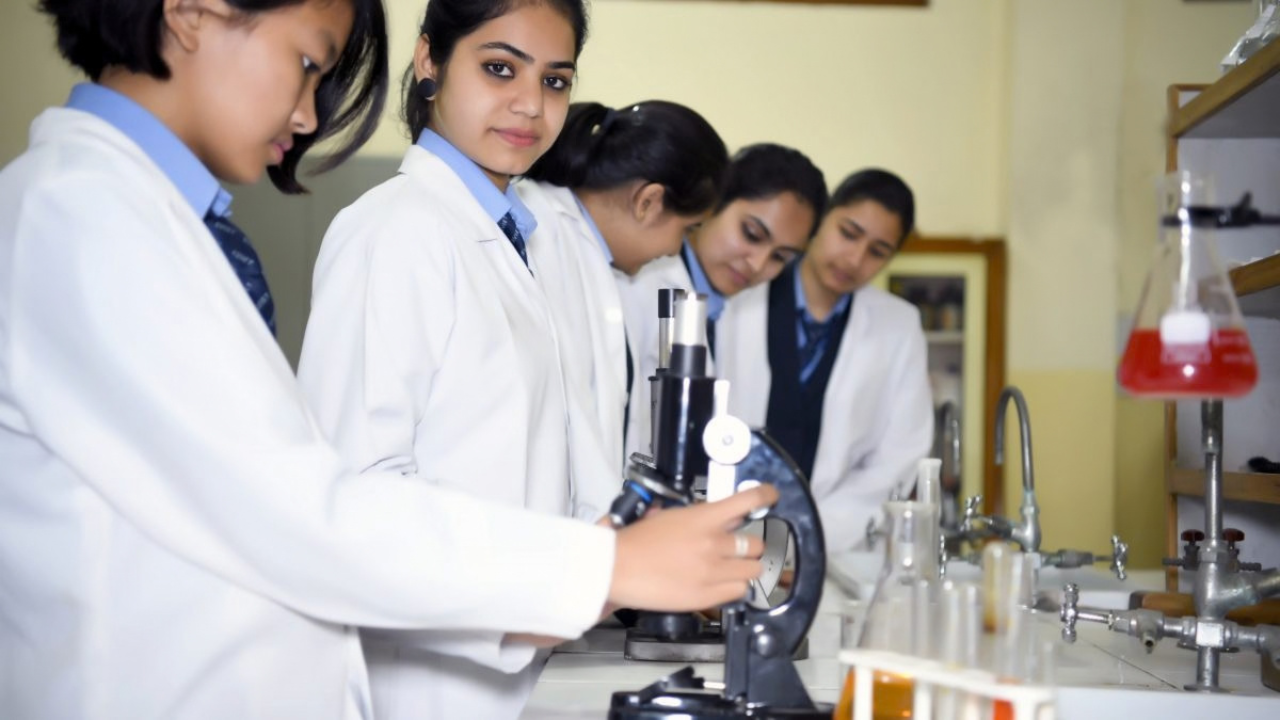
In the case of Degree courses 12th with PCB is required. The minimum requirement is 50 percent marks in most colleges and some colleges hold entrance tests for their own. There are also some national entrance exams, such as NEET and CUET, that are accepted for some degree programs.
Certificate courses are the most relaxed. Many of them accept students who have just passed 10th class.
Admission Process for Paramedical Courses
Getting admission is simpler than most people expect. Here’s how it usually works.
First, decide your course and shortlist colleges. Check whether the institute is recognized by the relevant medical or paramedical council. This step matters more than the college building or the brochure photos.
Second, fill out the application form. Most colleges open admissions between May and July. Applications are usually online now, so you can apply from home.
Third, prepare for selection. Some colleges admit students purely on 12th marks. Others conduct a small entrance test or a personal interview. Competitive institutes like AIIMS have their own entrance exams.
Fourth, once selected, complete document verification and pay the fees. Keep your 10th and 12th mark sheets, transfer certificate, and identity proof ready.
And no, most paramedical courses do not require NEET. Only a few degree programs ask for it. For the majority of courses, your 12th marks are enough.
Career Scope After Paramedical Courses
Now comes the fun part. Paramedical staff members work in facilities such as hospitals, diagnostic laboratories, nursing homes, rehabilitation centres, blood banks, research institutes, and even schools and corporate wellness programs.
These are the available job roles that you can apply for: Lab technician, radiographer, OT technician, dialysis technician, ECG technician, emergency medical technician, physiotherapist, optometrist and cardiac technologist. There is a need for each specialization and radiology and cardiac care professionals have among the highest salaries in the paramedical sector.
Growth is real too. With 3 to 5 years of experience, salaries often double. And if you clear exams like IELTS or OET, countries like the UK, Canada, Australia, and the UAE welcome Indian paramedics with salaries several times higher than what you’d earn at home.
Top Recruiters for Paramedical Graduates

| Sector | Companies |
| Hospitals | Apollo Hospitals, Fortis, Max Healthcare, Medanta, Manipal Hospitals |
| Diagnostics | Dr. Lal PathLabs, Thyrocare, Metropolis, SRL Diagnostics |
| Home Healthcare | Portea Medical, Apollo HomeCare, Healthcare at Home |
| Government | AIIMS, ESIC Hospitals, State Health Departments, Defence Services |
Why Choose a Paramedical Course Over MBBS?
Let’s be honest here. MBBS takes 5.5 years and costs lakhs, sometimes crores. Paramedical courses take 6 months to 4.5 years and cost a fraction of that. MBBS demands NEET, one of the toughest exams in the country. Most paramedical courses don’t.
Does that make paramedical better? Not necessarily. But if you want to enter healthcare quickly, affordably, and with strong job security, it’s a smart and respectable path. These professionals aren’t backups or second choices. Hospitals literally cannot run without them.
Final Word
The complete details about paramedical courses in India, course list, fee, eligibility and admission process along with career scope. It may be a lab job, a radiology job, a nursing job or a physiotherapy job, but it is a real job and a real salary and a real respect.
India’s healthcare industry is expanding every day and requires good human resource at every level. If you are fond of Science, enjoy doing practical work and want to help people without having to spend decade in education, then this is your door. Walk through it.
Read More: How to Calculate Distance Between Two PIN Codes in GST (Pin to Pin Distance in GST)