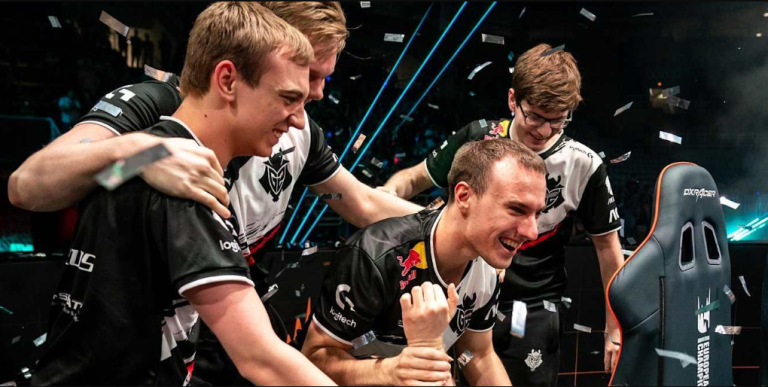
Competitive gaming has crossed every threshold that once separated it from traditional sport. Professional players train eight to twelve hours daily, teams employ coaches and analysts, tournaments fill arenas with tens of thousands of spectators, and prize pools regularly exceed those of established athletic competitions. Esports is no longer a subculture operating on the fringes of entertainment — it is a global industry with its own stars, rivalries, broadcast infrastructure, and fan ecosystems that rival anything conventional sport has built over the past century. Fans looking to follow esports competition and place informed wagers on major tournaments can explore dedicated markets at Dbbet.
What Is Esport Gaming and How Did It Begin
Esport gaming refers to organized, competitive video game play at a professional or semi-professional level. Its roots stretch back to the early 1970s when Stanford University held what is widely considered the first video game competition. The scene grew steadily through arcade culture in the 1980s and home console competition in the 1990s before the internet transformed isolated local tournaments into globally connected competitive ecosystems. South Korea was pivotal — StarCraft became a national sporting obsession in the late 1990s, broadcast on dedicated television channels with professional players achieving celebrity status. That model proved the concept: competitive gaming could draw audiences, generate revenue, and sustain professional careers. The rest of the world followed, and the industry has never looked back.
The Structure of a Professional Esports Team
An esports team today looks considerably more like a traditional sports franchise than the informal squads that competed in early LAN tournaments. At the playing level, rosters typically consist of five to six active players depending on the game, supported by substitute players who train alongside the main squad. Behind the players sits a coaching staff — head coach, assistant coaches specializing in specific roles or opponents, and an analyst whose job is breaking down opponent strategies through hours of replay review. Performance staff increasingly includes sports psychologists, nutritionists, and physical trainers who manage the physical and mental demands of a schedule that leaves little room for recovery. Team managers handle logistics, contracts, and the administrative complexity of moving rosters across international borders for tournaments.
Esports Battle: How Tournaments Are Structured
An esports battle at the professional level follows competition formats that vary significantly by game but share common structural logic. Most major titles run a combination of regular season league play and major tournament events — often called Majors or Championships — that serve as the competitive calendar’s centerpiece moments. League play provides consistent income and ranking points across a season. Major tournaments deliver the largest prize pools, the biggest broadcast audiences, and the career-defining results that separate good teams from historically significant ones. Formats within tournaments typically progress from group stages — where teams play a round-robin or GSL bracket to determine advancement — through knockout rounds to a grand final. The specific rules, map selection processes, and bracket structures differ between titles but follow recognizable competitive logic that experienced esports fans navigate intuitively.
The Biggest Games in Competitive Esports
The esports landscape is not monolithic — it is a collection of distinct competitive ecosystems built around individual titles, each with its own community, prize pool structure, and professional circuit. Counter-Strike has maintained a professional scene for over two decades, surviving multiple version transitions and remaining one of the most watched competitive titles globally. League of Legends operates through Riot Games’ regional league system with an annual World Championship that draws viewership numbers rivaling traditional sporting finals. Dota 2’s The International has produced the largest prize pools in esports history, funded through a crowdsourcing model that generated over forty million dollars in a single year. Valorant, FIFA’s EA Sports FC competitive scene, and mobile titles like PUBG Mobile and Mobile Legends have expanded the ecosystem considerably in recent years.
How Professional Players Train and Prepare
The training regimen of a professional esports player would surprise anyone who still imagines competitive gaming as casual recreation. Daily schedules at top organizations typically begin with individual practice — solo ranked play designed to maintain mechanical sharpness and experiment with new techniques in a low-stakes environment. Team scrimmages against other professional squads follow, providing the tactical repetition that builds coordinated team play under realistic competitive pressure. Evening sessions often involve review — watching recorded scrimmages, identifying mistakes, and studying opponent tendencies through analyst-prepared breakdowns. Physical conditioning has become a standard part of elite preparation, with organizations recognizing that reaction time, focus, and stamina all have physical components that training addresses. Sleep management and nutrition protocols complete a preparation approach that mirrors professional sport more closely than most outside the industry expect.
Esports Arenas and the Live Event Experience
The shift from online-only competition to major live events has been one of esports’ most significant evolutions. Dedicated esports arenas now exist in Seoul, Los Angeles, Berlin, Shanghai, and dozens of other cities, purpose-built for competitive gaming with specialist lighting, broadcast infrastructure, and audience experiences designed around the specific demands of watching live esports. The Staples Center in Los Angeles hosted a League of Legends World Championship final that sold out in under an hour. The Bird’s Nest stadium in Beijing welcomed tens of thousands of fans for a Dota 2 final. These events demonstrate that esports audiences will travel internationally, pay significant ticket prices, and fill iconic venues to watch their favorite teams compete in person — behavior indistinguishable from traditional sporting fandom at its most intense.
Esports in South Asia and Bangladesh’s Growing Scene
South Asia’s esports ecosystem is younger than those of East Asia and North America but growing at a pace that commands serious attention. Mobile gaming has been the primary driver — titles like PUBG Mobile, Free Fire, and Mobile Legends have massive player bases across Bangladesh, India, Pakistan, and Sri Lanka, and competitive communities have organized around them rapidly. Bangladesh hosts national mobile esports tournaments with prize pools that, while modest by global standards, are sufficient to attract serious competitive participation and begin professionalizing local talent. Internet infrastructure improvements across Bangladesh have reduced the latency issues that previously disadvantaged South Asian players in international online competition. The region’s young demographic profile — a large population of digitally native players in their teens and early twenties — provides a talent base whose competitive ceiling has not yet been tested at the highest level.
Sponsorship, Broadcasting, and the Esports Economy
The commercial infrastructure supporting professional esports has matured dramatically over the past decade. Endemic sponsors — peripheral manufacturers, gaming chair companies, energy drink brands — established the early sponsorship landscape. Non-endemic brands followed as viewership numbers became impossible to ignore: Mercedes-Benz, Louis Vuitton, Mastercard, and Red Bull have all made significant esports investments. Broadcast rights represent the industry’s largest revenue category, with platforms including Twitch, YouTube Gaming, and regional equivalents competing for exclusive or preferential streaming arrangements with major tournament organizers. Media rights deals for top leagues now run into tens of millions of dollars annually. Team valuations for the largest esports organizations have reached nine figures, reflecting investor confidence in an industry whose audience skews young, digitally engaged, and resistant to traditional advertising formats.
The Mental and Physical Demands of Elite Competition
Esports competitors face pressures that conventional sports audiences rarely consider. Career peaks often arrive before a player’s twenty-fifth birthday — reaction time and mechanical precision begin declining in measurable ways by the late twenties, creating career timelines more compressed than almost any traditional sport. Burnout is endemic in scenes where daily practice hours are extreme and roster changes are frequent and public. The psychological pressure of performing under a global broadcast audience while executing split-second decisions under full team scrutiny creates a stress environment that sports psychologists are only beginning to fully understand and address. Organizations that invest seriously in mental health support and career transition planning for retiring players are gaining competitive advantages in recruitment — top players increasingly choose organizations that treat their long-term wellbeing as a priority rather than an afterthought.
The Future of Esports: Where the Industry Is Heading
Esports stands at an interesting inflection point. The explosive growth phase of the mid-2010s has given way to a more measured expansion in which some organizations have contracted, several leagues have restructured, and the industry is reckoning seriously with sustainable business models rather than growth-at-all-costs approaches. Simultaneously, mobile esports is unlocking massive new markets across South and Southeast Asia, Africa, and Latin America — regions where console and PC gaming penetration is limited but smartphone ownership is near-universal. Artificial intelligence is beginning to influence coaching and performance analysis in ways that will reshape competitive preparation. Collegiate esports programs are creating new development pathways in Western markets. And the integration of esports into major multisport events — Asian Games inclusion has already happened — signals that institutional recognition of competitive gaming as legitimate sport is no longer a question of if but of how quickly it becomes universal.